ABOUT
Homayoun Sakhi
A life devoted to the rubab.
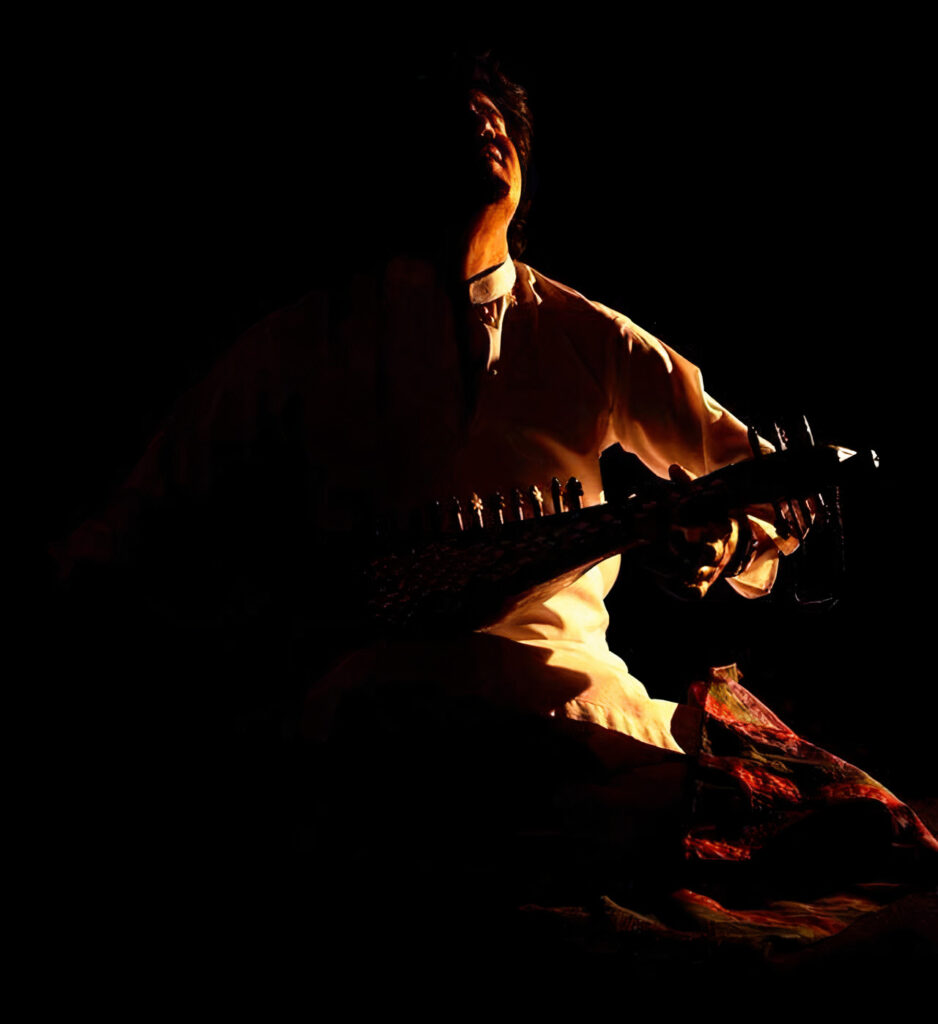
Homayoun
Sakhi
“Composer, vocalist, and internationally acclaimed master musician bringing Afghan classical tradition into dialogue with contemporary global audiences through extraordinary musicianship and improvisation.”
Homayoun Sakhi (همایون سخی) is widely regarded as one of the world’s foremost masters of the Afghan rubab and among the most influential musicians in the instrument’s modern history. A virtuoso performer, composer, educator, and innovator, he has transformed the artistic possibilities of Afghanistan’s national instrument while bringing its rich musical tradition to audiences across the globe.
As a composer and collaborator, Sakhi has worked with some of the world’s most respected artists and institutions, including Yo-Yo Ma, Kronos Quartet, the Berlin Philharmonic Orchestra, the Gulbenkian Orchestra, Ustad Farida Mahwash, and acclaimed composer Hannibal Lokumbe. His music transcends cultural and stylistic boundaries, creating powerful dialogues between tradition, innovation, improvisation, and contemporary artistic expression.
Over the past three decades, Sakhi has built an international reputation for extraordinary musicianship, technical brilliance, and artistic innovation. His work has been presented at major concert halls, festivals, and cultural institutions worldwide, including Carnegie Hall and the John F. Kennedy Center for the Performing Arts, and through collaborations with the Aga Khan Music Programme. His performances have reached audiences across North America, Europe, Asia, and the Middle East and have been presented before heads of state, royal families, and leading cultural institutions around the world.
Born into one of Afghanistan’s most distinguished musical families, Sakhi began studying the rubab under the guidance of his father, Ustad Ghulam Sakhi, following the traditional ustad-shagird (master-apprentice) lineage. Building upon this foundation, he developed a highly distinctive artistic voice that has redefined the role of the rubab on the international stage.
Widely credited with revolutionizing contemporary rubab performance, Sakhi expanded the instrument’s technical and expressive vocabulary, introducing innovative approaches that challenged conventional practice and opened new possibilities for the instrument as a solo, ensemble, and cross-cultural voice. Through decades of artistic exploration, he has elevated the rubab from a largely regional tradition to global recognition and established it as a compelling instrument for contemporary artistic dialogue.
In 2020, Sakhi founded the Rubab Academy, an institution dedicated to preserving, teaching, and advancing the tradition of the Afghan rubab for future generations. Through his teaching and mentorship, he continues to inspire a growing international community of musicians and students around the world.
Today, Homayoun Sakhi maintains an active international performance schedule while continuing his work as a composer, educator, and cultural innovator. His artistry reflects a rare combination of virtuosity, imagination, and authenticity, establishing him as one of the defining musical voices of his generation and one of the leading ambassadors of the rubab on the world stage.
The most innovative
Afghan Rubab player
OF HIS GENERATION
Homayoun
Sakhi
“Composer, vocalist, and internationally acclaimed master musician bringing Afghan classical tradition into dialogue with contemporary global audiences through extraordinary musicianship and improvisation.”
Homayoun Sakhi (همایون سخی) is widely regarded as one of the world’s foremost masters of the Afghan rubab and among the most influential musicians in the instrument’s modern history. A virtuoso performer, composer, educator, and innovator, he has transformed the artistic possibilities of Afghanistan’s national instrument while bringing its rich musical tradition to audiences across the globe.
As a composer and collaborator, Sakhi has worked with some of the world’s most respected artists and institutions, including Yo-Yo Ma, Kronos Quartet, the Berlin Philharmonic Orchestra, the Gulbenkian Orchestra, Ustad Farida Mahwash, and acclaimed composer Hannibal Lokumbe. His music transcends cultural and stylistic boundaries, creating powerful dialogues between tradition, innovation, improvisation, and contemporary artistic expression.
Over the past three decades, Sakhi has built an international reputation for extraordinary musicianship, technical brilliance, and artistic innovation. His work has been presented at major concert halls, festivals, and cultural institutions worldwide, including Carnegie Hall and the John F. Kennedy Center for the Performing Arts, and through collaborations with the Aga Khan Music Programme. His performances have reached audiences across North America, Europe, Asia, and the Middle East and have been presented before heads of state, royal families, and leading cultural institutions around the world.
Born into one of Afghanistan’s most distinguished musical families, Sakhi began studying the rubab under the guidance of his father, Ustad Ghulam Sakhi, following the traditional ustad-shagird (master-apprentice) lineage. Building upon this foundation, he developed a highly distinctive artistic voice that has redefined the role of the rubab on the international stage.
Widely credited with revolutionizing contemporary rubab performance, Sakhi expanded the instrument’s technical and expressive vocabulary, introducing innovative approaches that challenged conventional practice and opened new possibilities for the instrument as a solo, ensemble, and cross-cultural voice. Through decades of artistic exploration, he has elevated the rubab from a largely regional tradition to global recognition and established it as a compelling instrument for contemporary artistic dialogue.
In 2020, Sakhi founded the Rubab Academy, an institution dedicated to preserving, teaching, and advancing the tradition of the Afghan rubab for future generations. Through his teaching and mentorship, he continues to inspire a growing international community of musicians and students around the world.
Today, Homayoun Sakhi maintains an active international performance schedule while continuing his work as a composer, educator, and cultural innovator. His artistry reflects a rare combination of virtuosity, imagination, and authenticity, establishing him as one of the defining musical voices of his generation and one of the leading ambassadors of the rubab on the world stage.


